
THINK FIRST... AUTOMATE LATER.
Before automating a business, you have to learn to read it.
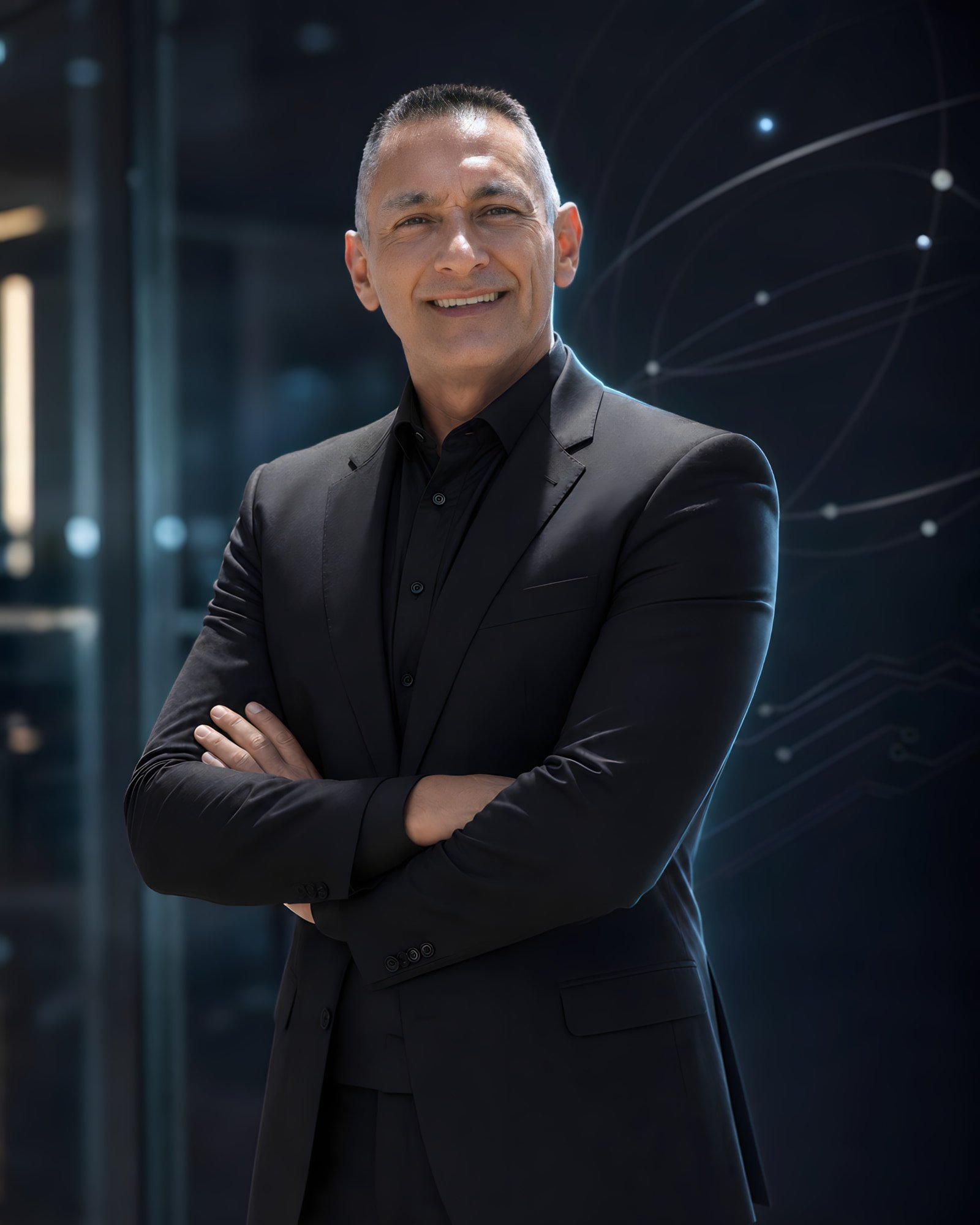
Guillermo Figueroa Guzmán—CEO & Founder of VortexNeural
My path began in operations, where logistics, processes and teams turn every decision into time, cost and outcome.
Over the years, that experience merged with systems analysis, ERP and WMS, Linux infrastructure and continuous improvement: measuring, finding root causes, testing, and keeping only what proves its value.
Cybersecurity completed that view, adding hardening, web and cloud security, vulnerability analysis and access protection. Today I lead VortexNeural to turn experience, technology and artificial intelligence into processes that are clearer, safer and able to evolve.

Career path
A journey of learning and building
-
OPERATIONS
Understanding how the business really works.
Logistics and operations management taught me how processes, teams and decisions actually function.
-
SYSTEMS
Turning needs into structure.
Systems analysis, ERP and WMS let me organize information, connect processes and build sustainable solutions.
-
CONTINUOUS IMPROVEMENT
Measure, test and learn.
Analyzing root causes, visualizing the flow and validating results turns every improvement into applicable knowledge.
-
CYBERSECURITY
Designing and protecting trust.
Hardening, web and cloud security, vulnerability analysis and access protection built in from the architecture up.
-
VORTEXNEURAL
Integrating experience, technology and intelligence.
The convergence of these disciplines transforms organisations by providing them with control, security and purpose.
I didn't come to artificial intelligence chasing a trend. I got here after years analyzing processes, fixing inefficiencies and building systems so organizations can better understand what's happening, protect what matters and work with more intelligence.
Integrated vision
Disciplines that form a single vision
-
Operations and logistics
Direct understanding of flows, resources, inventories, distribution, teams and real operational needs.
-
Systems and integration
Translating business problems into architectures and integrations that connect processes, data and applications without creating new technology silos.
-
ERP and WMS
Understanding the relationship between management systems and what actually happens in warehouses, operations, administration and decision-making.
-
Continuous improvement
Measurement, root-cause analysis, process visualization, controlled testing and result validation to turn every improvement into applicable learning.
-
Linux, cloud and infrastructure
Administration of servers, services and integrations on robust, scalable, open and controllable environments.
-
Teaching and adoption
The ability to translate complexity into understanding, and turn that understanding into teams' capacity to act.
-
Security and continuity
Traceability, permissions, backup, recovery, human oversight and operational control over automated processes.
-
Cybersecurity
Hardening, web and cloud security, vulnerability assessment, access protection and technical risk reduction across systems, applications and infrastructure.
-
Automation and artificial intelligence
Connecting information, rules and models to speed up processes and decisions without turning the organization into a black box.
Working philosophy
My philosophy: technology with purpose
-
Useful technology
Solves real problems and generates tangible value.
-
Understandable technology
Clear, simple and accessible for every team.
-
Integrated technology
Connects with your systems and adapts to your business.
-
Measurable technology
Every improvement is measured, demonstrated and optimized.
-
Secure technology
Builds in continuity, traceability, permissions, recovery and cyber-resilience criteria from the design stage.
-
Human technology
Technology is always in the service of people.
Before implementing, we understand. Before automating, we listen. Before moving forward, we align.
Technology is the last step. The first step is understanding.
Let's start with the diagnostic
We'll analyze how your organization works today, where value is being lost, what risks exist, and which parts can evolve by building on what you already have.