Projects that turn real processes into controlled operations
Four examples of how we connect information, systems and decisions without hiding the real status of each solution.
Four projects · four visible states
Capability applied to documents, people, companies and regions.
Each project distinguishes the problem, the transformation and the operational result. The technical detail stays available without turning the page into a lengthy specification.
System developed and validated
Document automation, third-party confirmations and tax forms
Problem
Emails, attachments and forms arrive in different formats and require manual classification, checks and record-keeping.
Transformation
The system identifies entities, reads attachments, organizes third-party confirmations and extracts data from Spanish tax forms 303, 111 and 115.
Operational result
Validations, human review of exceptions and traceability from receipt through to the final record.
How the system is structured
The input is logged, the content is classified and rules check consistency. When information is missing or confidence is low, the case goes to review; validated results feed searchable history.
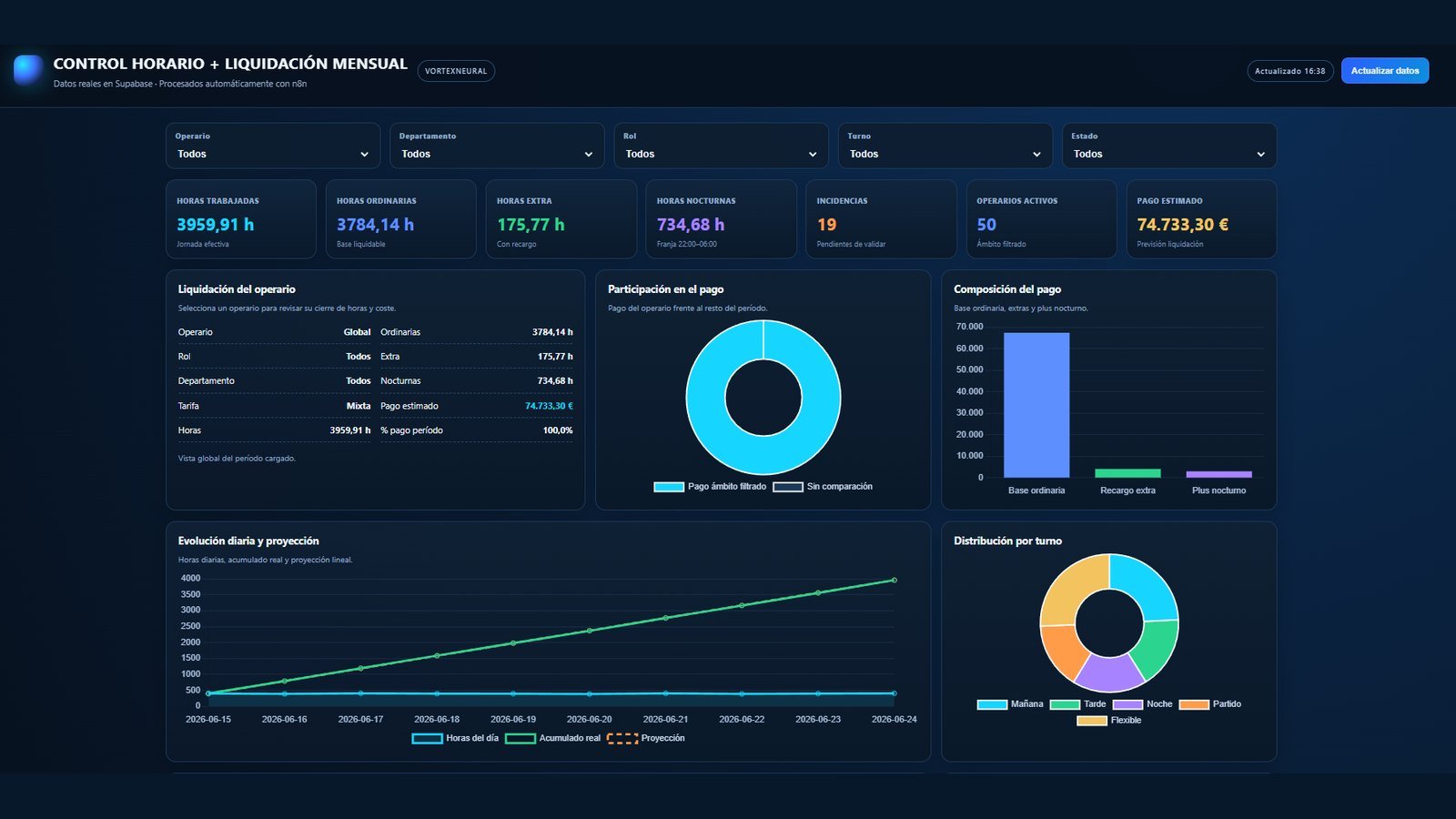
The Excel spreadsheet from the time-tracking system requires calculations and review before it can provide a reliable overview of working hours and incidents.
Transformation
The information is imported and processed to calculate shifts, overtime, night hours, rotations and exceptions.
Operational result
A dashboard supports supervision, incident review and decision-making without inventing savings estimates.
How the system is structured
The import keeps the original data, applies calculation rules and separates cases that need review. The dashboard allows querying aggregated results and the operational detail of each incident.
Orders, delivery notes, invoices, customers and suppliers move across organizations and internal systems with statuses that are hard to track.
Transformation
The proposal connects structured information between companies and keeps the analysis of each exchange within the process.
Operational result
Tracking and traceability planned from origin through to receipt, while explicitly keeping its development status visible.
How the system is structured
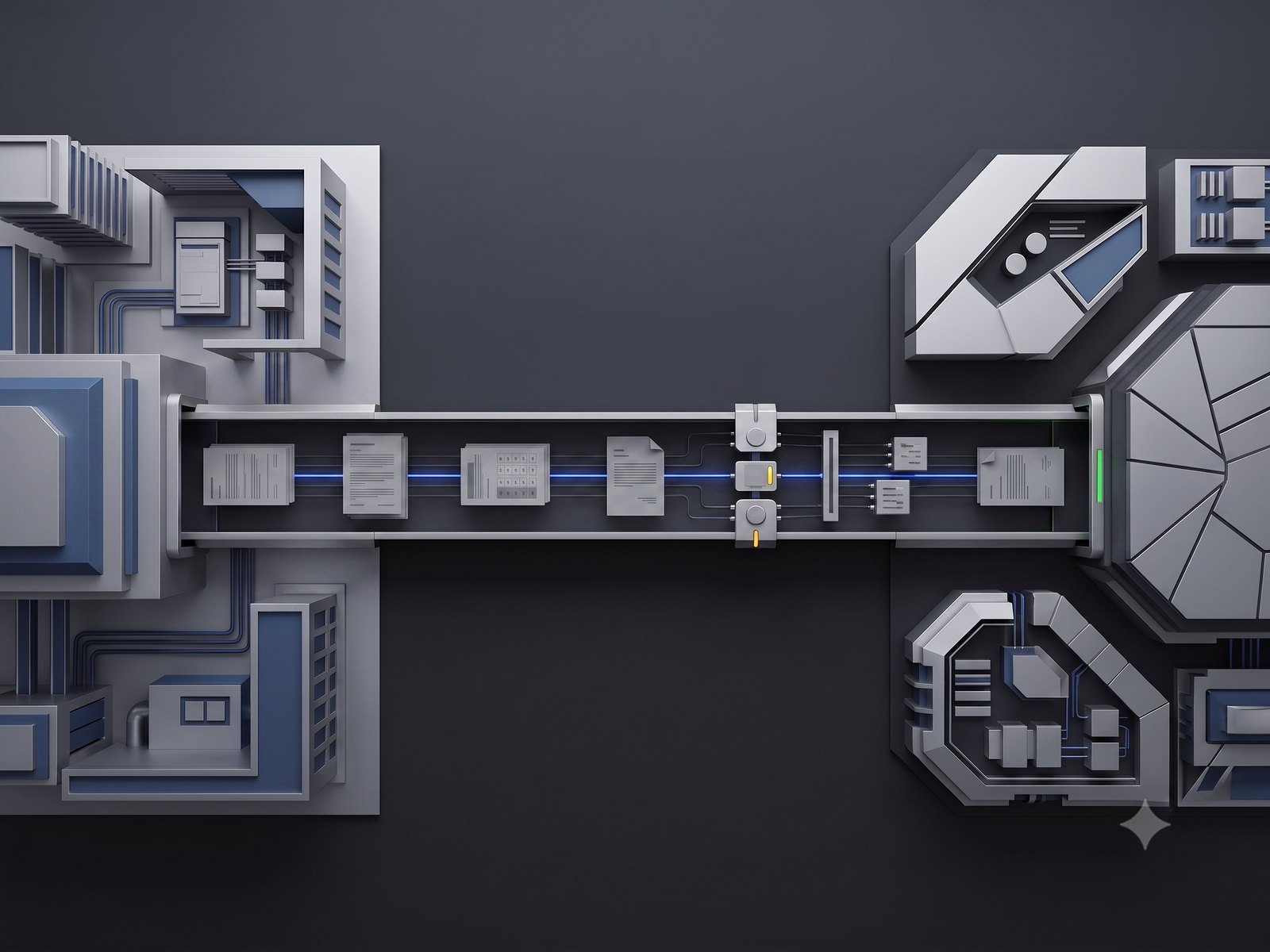
Each organization keeps its own systems. An integration layer translates documents and statuses, applies validations and logs the journey so that owners on both sides can identify pending items and exceptions.
Organization AOperationsInternal system
OrderDelivery noteInvoiceTracking and traceability
Organization BAdministrationInternal system
Technical proposal and simulation
Smart rural surveillance on existing infrastructure
Problem
Cameras can record an event without turning it in time into a clear, verifiable alert.
Transformation
The proposal uses existing cameras to detect, classify and validate events before triggering an alert.
Operational result
Optional human intervention, lighting or acoustic warning, and incident logging. It is not presented as a deployed system.
How the system is structured
Detection triggers a validation step that reduces alerts without context. When the event meets the defined criteria, the system alerts so a person can decide on the action, and a record of what happened is kept.
Cameras
Detection
Validation
Alert
Action
Log
From evidence to the next process
The case study guides the diagnostic, but doesn't limit the solution.